

Living Practice.
Grounded in Action.
We don’t separate learning from doing. Our initiatives connect critical environmental education with micro-scale urban agriculture, cross-sector dialogues, and living field trials across Asia.
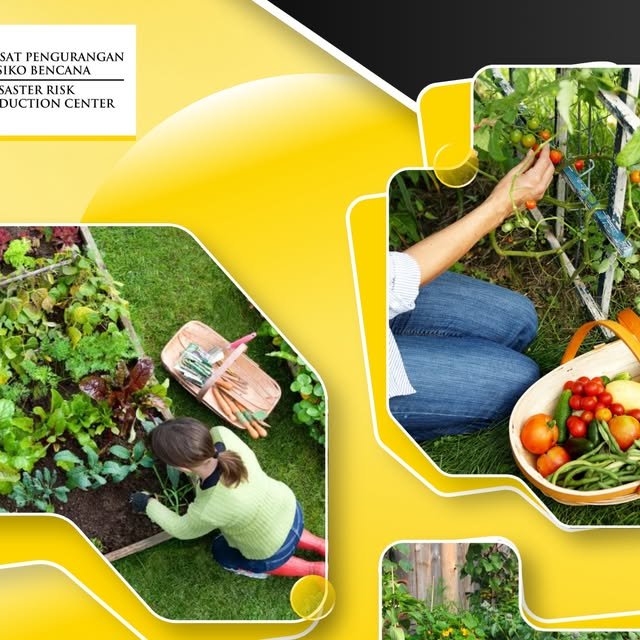
What if food resilience could start with one square meter?
Inspired by Masanobu Fukuoka’s One Straw Revolution and his natural farming method, we explore how growing food can become a practical way to learn about resilience, biodiversity, soil, food systems, and everyday sustainability.
One square meter may seem small. But it can become a classroom, a laboratory, a food source, a habitat, a community project, and a starting point for bigger questions. We are developing educational resources and citizen science activities around the One Square Meter Movement. Start small. Observe daily. Grow together.
A Classroom
Learning agroecology through direct hands-on tactile practice.
A Laboratory
Testing soil regeneration, composting, and companion planting.
A Community Hub
Connecting neighbors, youth, and researchers in shared food care.
Food Resilience
Small-scale, decentralized sovereignty against climate shocks.

Weekly Study Groups on Climate Change & Systems Thinking
We explore practical approaches to regenerative living through weekly study groups focused on Regenerative Design, Systems Thinking, Climate Education, and the Circular Economy as they relate to everyday life.
We use existing learning resources, open courses, research, conversations, and practical experiments as starting points. Then we ask the questions that bridge global frameworks with our own community realities.
What does this mean for us?
Translating broad global climate frameworks and circular economy theories into our specific local context.
What does it look like in our communities?
Connecting ecological literacy directly with everyday household, urban, and rural neighborhood conditions.
What can we try?
Moving immediately from conceptual dialogue into tangible, testable experiments and collective action.
What are we still missing?
Examining unseen gaps, unvoiced community perspectives, and institutional challenges that require deeper inquiry.

Ask & Observe
Ask a question and look closely. Notice local patterns in soil, water, microclimates, biodiversity, and everyday waste.
Collect Information
Gather lived data and observations from ground reality, combining scientific curiosity with traditional stewardship.
Try & Observe
Try something and observe what happens. Test small-scale interventions in soil regeneration, companion planting, and circular living.
Share What You Learn
Document findings and share them openly across communities so others can adapt, replicate, or refine the practice.
Research doesn’t always begin in a laboratory. Sometimes it starts in a garden.
We are developing small-scale citizen science and learning experiments that connect environmental education with everyday life.
Because research doesn’t always have to begin in a high-tech facility. Sometimes it starts in a garden. A rice field. A campus. A neighborhood. Or your own backyard.


Adopt an ARA Class
What if we didn’t have to build everything from scratch? We believe regenerative education can travel: one university, one classroom, one community, and one educator at a time.
You don’t need to redesign your entire university curriculum overnight. You don’t need to become an ecological expert right away. Start with one class. Bring your students. Learn with us. Adapt the learning to your context — then see where it takes you.
Talk to Us About Adopting a ClassSelect from modules like Regenerative Systems, Food Sovereignty, or Climate Communication.
Bring your students together for sessions facilitated in tandem with ARA practitioners.
Translate discussions into hands-on campus experiments, community gardens, or research projects.
Ready to Put Learning into Practice?
Join ARA’s dialogue series, participate in living experiments, or bring regenerative learning to your classroom or campus.